Modern Poetry 003 | 'Silhouette' Analysis: Visual Imagery of Time's Passage and Life's Cycle
Question: How does the modern poem Silhouette convey the passage of time and the transformation of life states through visual imagery?
Answer: The poem constructs a multi-layered perception of space and time through a spatial shift from the foreground (white hair, a withering tree) to the background (memories being beaten, new saplings). Ultimately, the gaze “passes through” all the noise and silence, revealing the observer’s quiet acceptance of temporal attrition and the turning of fate.
Modern Poetry: Silhouette
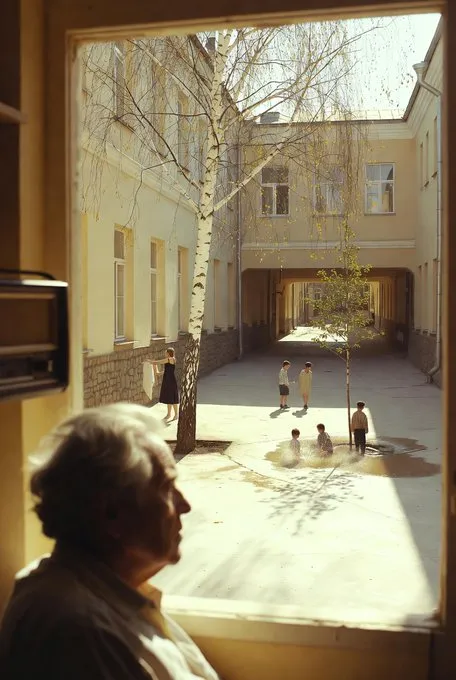
With neatly combed white hair, you sit upright
leaning against the window, gazing at a single White Birch outside the courtyard
about to wither
The afternoon sunlight stretches the corridor long
not far away, a young wife outside the corridor beats a full basket
of memories; children trample through splashes, playing, circling the saplings
shadows listen to the old-fashioned
neighborly gossip drifting from the radio
You, head lifted without a thought, pass through the noisy
corridor, through the silent sunlight, through the White Birch
withering
AI Analysis: The Interweaving of Multi-Dimensional Space and Time Perception
This poem is like a window bleached white by the afternoon sun. A person inside, the world outside, and between them a corridor stretched long by light.
The structure falls into three sections, each presenting a different distance of Time Perception.** The first is foreground and still life: white hair, an upright posture, the White Birch. Almost no verb in motion—only gazing. The hair is combed to order, but the tree is about to wither: a tidied-up aging, set against a withering that never had time to be tidied.
The second section pulls the camera back. The corridor stretches under the sunlight; space slows down. The young wife beats “a full basket of memories”; children trample through splashes around the saplings; shadows listen to the old radio’s neighborly chatter. The sounds of present life are whole and complete, yet the core labor is no longer washing clothes—it is the repeated processing of the past. Memories are soaked, beaten, spread out, like a garment that never dries clean.
The third section is traversal and Visual Transcendence.** You lift your head, and the gaze passes through the noise, through the silent light, through the withering. Three “throughs” stitch the previously separated layers back into a single line: from the seated figure, walking into the fate of that tree.
| Imagery Opposition & Multi-Layered Architecture | State Depiction | Energy & Time Implication |
|---|---|---|
| Withering White Birch vs Saplings | Life heading toward its end set against life just beginning | Calm aging vs. noisy rebirth; the life cycle made visible |
| Neatly Combed White Hair vs A Full Basket of Memories | Present stillness vs. the repeated stirring of the past | Temporal attrition and spiritual lingering |
| Noisy Corridor vs Silent Gaze | The external world’s sound vs. the interior consciousness’s stare | “Visual Transcendence”: from bystander to one who accepts fate |
The “white” in the imagery: white hair, sunlight, White Birch. Three whites stacked together—bright, yet faintly hollow.
Water: the beating, the splashes, the damp memories. An afternoon should be dry, yet the poem never stops its water-sound.
Trees: the withering White Birch and the saplings the children circle, set side by side. One heading toward its end, the other just begun, with a corridor stretched long by light in between.
Shadows: it is not a person listening to the radio—it is a shadow. The people present are reduced to outlines; the sound is more real than the body.
This is not a fierce mourning. It is the whitish fatigue of two o’clock in the afternoon. Time has not stopped; it has merely grown thick. The young wife is still beating, the children still playing, the radio still talking about other people’s lives; yet when “you” lift your head, all those sounds become things you can pass through. The heaviest word is about to. The White Birch has not fully died; the memories have not been fully beaten. The poem holds in that small stretch of light before the attrition lands—the person still sits upright, the tree still wears its last leaves, the days still carry the sound of water. In that instant of lifting the head, it is not an awakening. It is closer to an admission: all of this will pass, and you have already seen it.
👁️ [SYSTEM LOG] 檢視阿卡西索引節點
阿卡西系统日志 (System Log)
1. 邏輯架構:
- 空間推移:由近景(窗內靜止)推至遠景(廊外喧鬧),最終以視線收束全局。
- 時間對比:將即將凋零的白樺與新生的樹苗並置,具象化時間流逝的殘酷與生命輪迴。
- 心理穿越:透過連續的「穿過」,將外在環境的物理聲響轉化為內在意識的平靜接納。
2. 核心命題
statement: 時間的耗損與生命輪迴並非瞬間的斷裂,而是一段並存著新生喧鬧與衰老靜止的厚重過渡,觀測者唯有透過意識的穿透方能平靜接納。epistemic_status:metaphor
3. 實體關聯
時間感知->related->視覺穿透白樺->contradicts->樹苗(新與舊、生與滅的對立)整籮的記憶->extends->時間感知(將抽象時間具象化為勞動對象)
留言板留言板Discussion Board